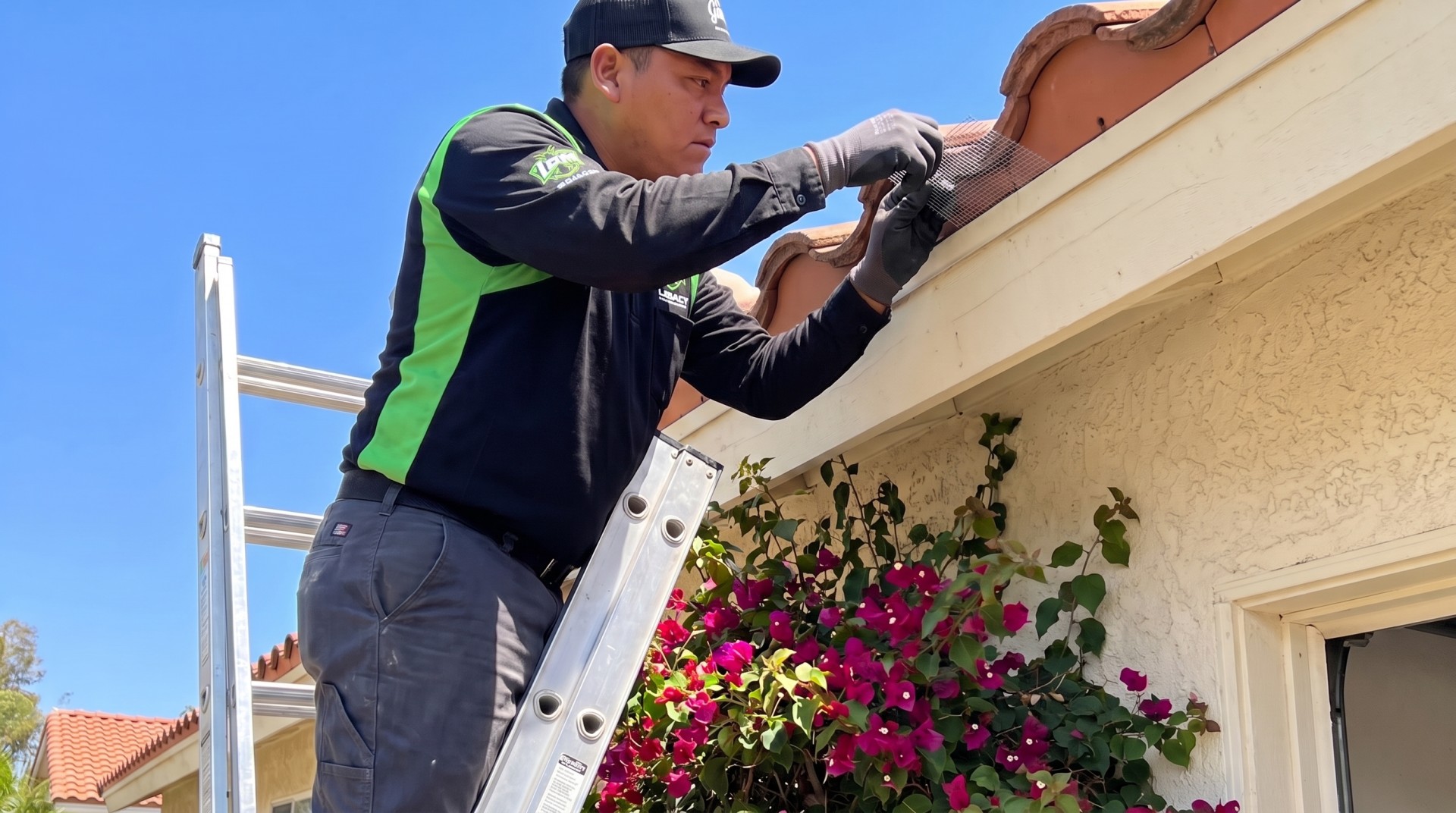
Wildlife work is the one pest service where the law does most of the deciding. Bats, birds and small mammals are each governed by different rules in California, and several of the things you will see advertised elsewhere are not legal here. We would rather tell you that up front than sell you something we cannot do.
Call 619-277-4796 and tell us what you have, where it is, and roughly how long it has been there. We are open 24 hours a day, seven days a week.
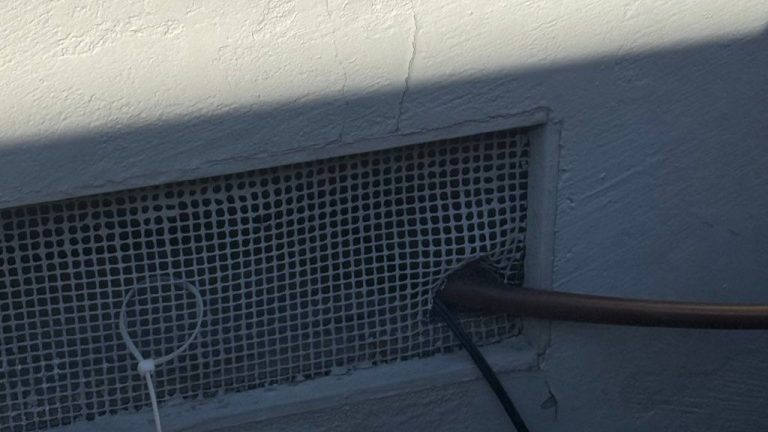
Closing how animals get in is the only step that ends the problem. Quarter-inch galvanised mesh, buried edges, and fasteners that hold.
Learn More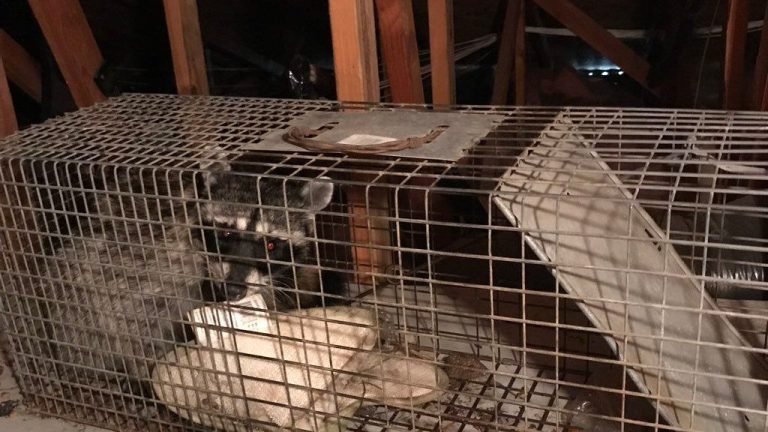
Raccoon removal and attic exclusion across San Diego County, with the latrine cleanup that most quotes leave out.
Learn More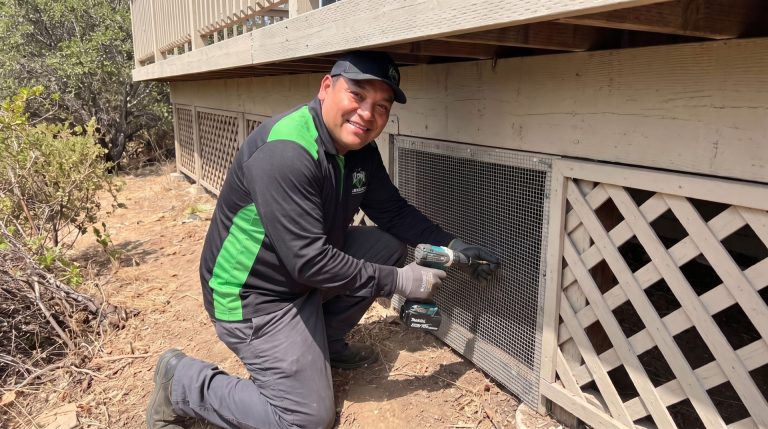
Opossum removal and under-structure exclusion for San Diego County homes, plus the flea problem that comes with them.
Learn More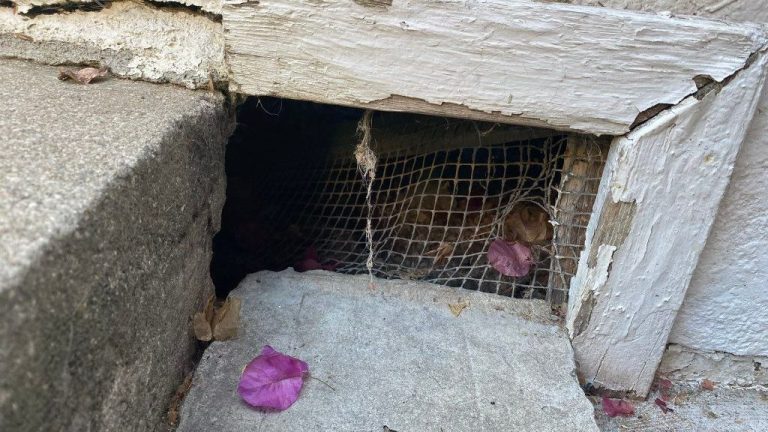
Skunk removal and den exclusion for San Diego County properties, handled so nothing gets sprayed under your house.
Learn More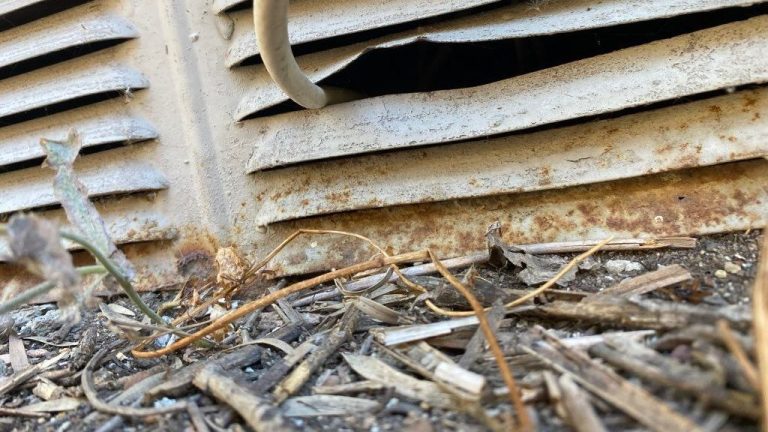
Bird exclusion, netting and solar array screening for San Diego County, worked to what federal law actually allows.
Learn More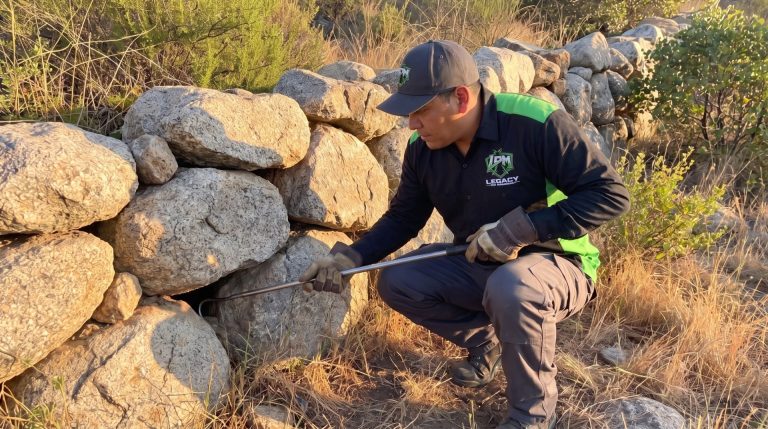
Identification first. Four rattlesnake species live in this county and one of them is illegal to kill.
Learn More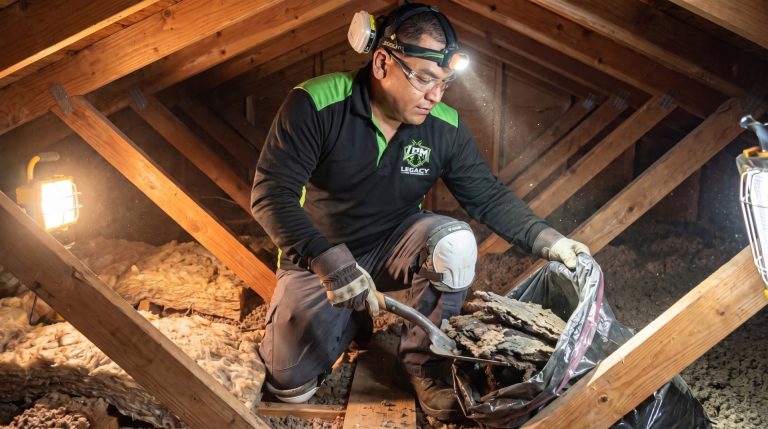
Cleanup and re-insulation after wildlife, done where it is genuinely needed and not sold where it is not.
Learn MoreA trapped animal cannot simply be moved somewhere nicer. The Department of Fish and Wildlife states it plainly: wildlife cannot be trapped and released elsewhere. A healthy adult has to be released where it was caught, and moving it needs written permission from the department. So the line you see on a great many pest control websites, about animals being humanely relocated to a natural habitat far away, describes something that is against the law in this state.
What is allowed is a rehabilitator, and we use it. An animal that is injured, sick or orphaned can go to a permitted wildlife rehabilitation facility, whose defined purpose is to restore it to health for release back into the wild. Between that and leading with exclusion, a job here does not have to end with the decision nobody wants to make.
Bats cannot be excluded during maternity season. From roughly mid-April through the end of August, flightless pups may be inside the roost. Sealing the entry in that window traps them, and they die in the wall. UC guidance advises avoiding exclusion from May through September; the state's own bat mitigation report works to a window that excludes bats before April 15 and does not reopen the work until after August 31. If you call us in June about bats, we will almost certainly tell you to wait, and explain why.
Bats are protected nongame wildlife in California. No bat species here is currently listed as threatened or endangered at the state or federal level, so you will not hear us say that, but they are not animals you may simply remove.
There are also no pesticides or chemical repellents registered in California for controlling bats or driving them out of a roost. Anyone offering a bat spray or treatment is describing an unlawful pesticide application. Live exclusion is the only lawful and effective method.
The sequence matters more than the materials:
Skip step four and you get the same problem as excluding during maternity season, on a smaller scale. The species that most often use California buildings are the pallid bat, big brown bat, Yuma myotis and Mexican free-tailed bat.
This part is not our job and we will say so. In San Diego, bats test positive for rabies more often than any other animal, and bat bites and scratches can be small enough to miss. The county treats a person who was sleeping in the room, a child, or anyone unsure whether they were bitten as potentially exposed.
Do not handle a bat with bare hands. If there has been contact, or possible contact, speak to a healthcare provider promptly and contact your local animal control, who coordinate rabies testing when it is needed. That is the correct route. We do not test bats and neither should anyone else selling you pest control.
Most birds are protected under the federal Migratory Bird Treaty Act, and California adds its own protection through the Fish and Game Code, which makes it unlawful to take, possess or needlessly destroy the nest or eggs of any bird except as the code allows.
Three practical distinctions decide what can be done:
A nest holding viable eggs or nestlings is in use and federally protected until the young have fledged and no longer depend on it. A nest under construction, before the first egg, or an old nest after fledging, is not in use. Work is timed around that.
Worth being precise about one thing: moving a nest is not the same as removing one. Relocating a nest, even an empty one, requires a federal permit, because relocation means possessing it. Any company offering to relocate your bird nest is describing permitted work.
Federal rules allow a bird to be humanely removed from inside a home or business without a permit when its presence prevents normal use of the space, along with nests, eggs or nestlings inside an occupied building. That authorization does not extend to the outside of the structure. A swallow nest on your eave is a different legal situation from a sparrow loose in a warehouse.
Adhesive and glue traps are prohibited for birds.
House sparrows, European starlings and feral rock pigeons are non-native species that are not covered by the Migratory Bird Treaty Act, so the options are broader with them than with native birds.
Cliff swallows are common here and are protected. UC guidance gives the California nesting season as 15 February to 1 September; outside that window, nests under construction or old nests can be washed or knocked down, and deterrent work is straightforward. Inside it, completed nests are off limits without authorization. The practical consequence is that swallow work is planned in autumn and winter, before the birds return.
For prevention we use half-inch to three-quarter-inch exclusion netting, ledge and slope modification, and spikes.
Opossums, skunks, raccoons, ground squirrels, tree squirrels and gophers each sit in a different category under state law, which affects what is permitted and when. What they have in common is that the durable fix is structural, not the animal.
An animal in your attic, under your deck or in your crawl space got there through an opening. Removing the animal without closing the opening buys you a few weeks. We would rather spend the visit finding and sealing the way in, and confirming no dependent young are shut inside before anything is closed permanently.
Where trapping is genuinely necessary, the law requires traps be checked daily and every animal removed at each check.
Accumulated droppings are a real part of the job, handled with proper respiratory protection rather than a broom and a shop vacuum.
On histoplasmosis, the lung infection usually mentioned in connection with bat and bird droppings: the fungus that causes it lives mainly in soil in the central and eastern United States, particularly the Ohio and Mississippi river valleys, and it is uncommon in California. We are not going to tell you your attic is a health emergency. Dust from droppings should not be inhaled regardless, which is why cleanup is done with PPE.
Raccoon latrines are different and worth acting on quickly. Raccoons use communal defecation sites, and their roundworm eggs are not infectious when freshly deposited; they take at least two to four weeks to become infective. Prompt removal genuinely reduces risk, and young children are the group most at risk because of hand-to-mouth contact. Infections have been documented in Southern California.
Wildlife work commonly overlaps with these:
Not on its own, and not at all between roughly mid-April and the end of August. Sealing an active roost traps the bats inside. In maternity season it traps flightless pups, which die in the wall and become a much worse problem than the bats were. Exclusion uses one-way devices first, left in place about a week, and only then permanent sealing.
Not in the way most people picture it, and neither can anyone else in California. A healthy adult that is trapped must be released on site. Moving it elsewhere needs written permission from Fish and Wildlife, and the department states plainly that wildlife cannot be trapped and released somewhere else.
There is a lawful route that most companies never mention, and it is the one we use whenever it applies. An animal that is injured, sick or orphaned can be taken to a permitted wildlife rehabilitation facility — a facility whose defined purpose in the regulation is to restore it to health for release back into the wild. Orphaned young are the common case in this work, because opening an attic or a den in spring routinely finds them. Where the mother is still around, the first move is to reunite them so she carries them out herself. Where she is not, they go to a rehabilitator.
Euthanasia is what the rules permit for an animal too sick or injured to treat. It is not our default, and it is not how we like to finish a job.
All of which is why we lead with exclusion. Sealing the way in ends the problem without putting anyone in front of that decision at all.
It depends on whether it is in use. A nest with eggs or young is protected until they fledge. An old nest or one still under construction is a different case. Tell us what you are seeing and we will tell you which one you have and when the work can be done.
No, and nobody legally can. There are no pesticides or chemical repellents registered in California for bats. Exclusion is the only lawful method.
Do not handle it. Confine it to one room if you can do so safely, and contact your local animal control, who can retrieve it and coordinate rabies testing where needed. If anyone may have had contact, including someone who was asleep in the room, speak to a healthcare provider promptly.
We run wildlife removal from both offices. See El Cajon or San Diego for the communities each one covers, or browse the full list of service areas. You can also send us a request, or read more about Legacy Pest Management.
Call 619-277-4796 or send a request and tell us what you are dealing with. We will recommend a plan that fits the property rather than a default package.
Get Started
Tell us what you are seeing and where it is happening. You will get an honest assessment of the problem, what it takes to solve it, and whether your property needs ongoing service or a single visit. Pest, wildlife and termite work across San Diego County.