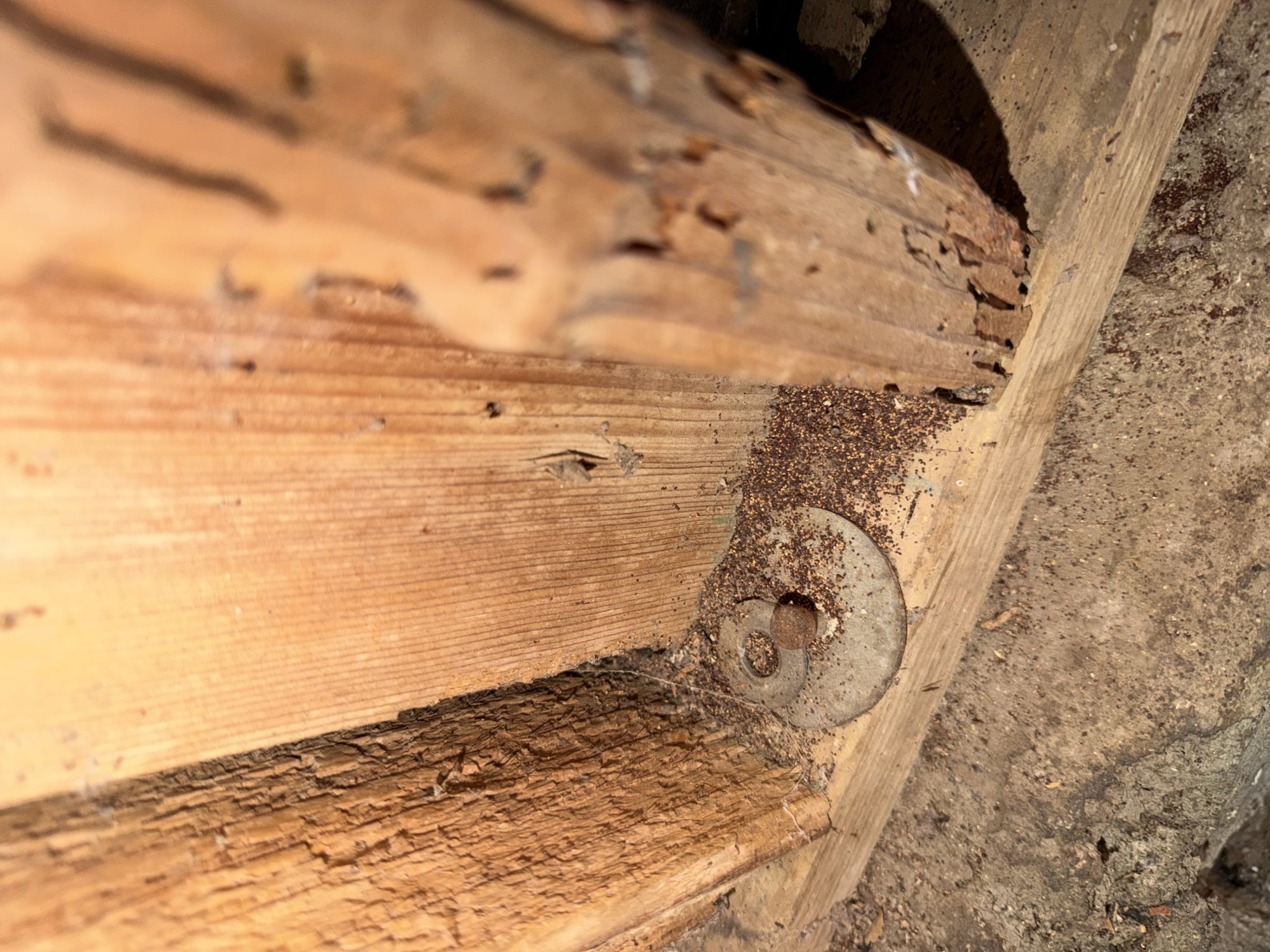
Termite work starts with a question that sounds academic and is not: which termite is it? Drywood and subterranean termites live differently, enter a building differently and are treated differently, and a method that resolves one will not touch the other. Identify first, then treat. Everything else follows from that order.
Legacy Pest Management handles both halves of the job — inspection to establish what is present and where it is, and treatment once the species and the extent are settled. This page covers how the two fit together and the decisions you will be asked to make along the way.
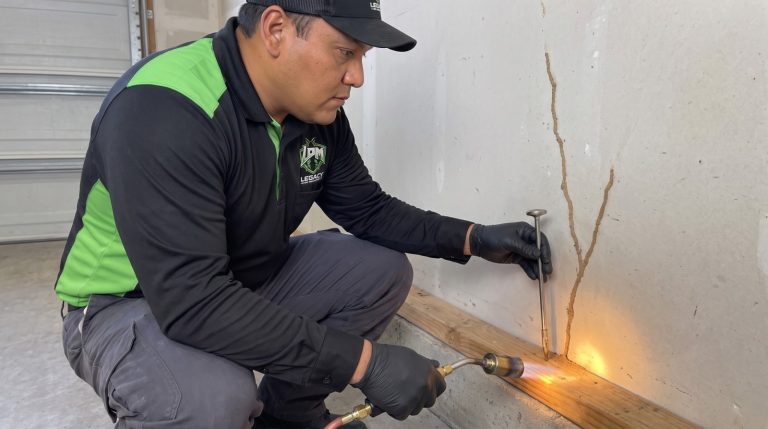
Find termite activity early with careful inspections for homes and businesses across San Diego County.
Learn More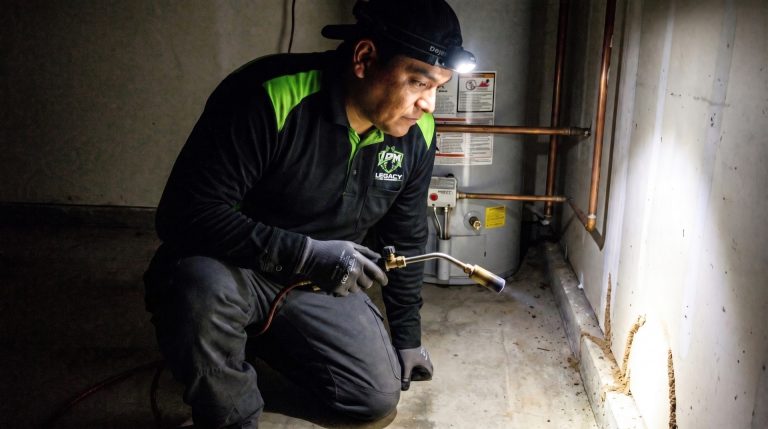
Protect your San Diego County property from termite damage with targeted treatment and clear next steps.
Learn More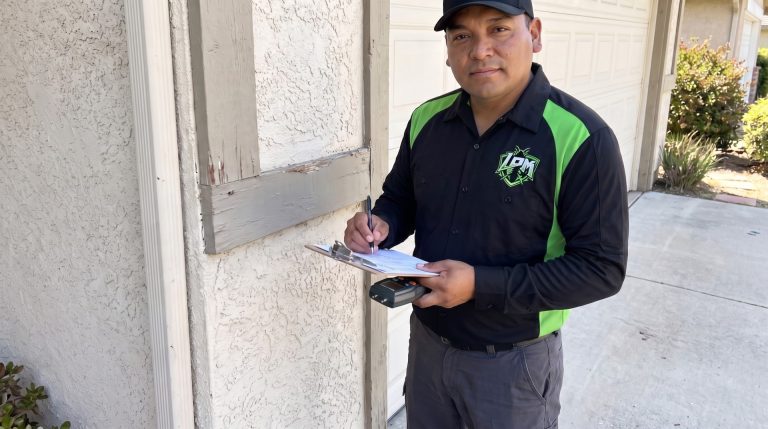
The state WDO report on form 43M-41 for escrow, refinance and pre-listing, explained rather than just handed over.
Learn MoreDrywood termites live entirely inside the wood they eat. No soil contact, no mud tubes, no moisture requirement beyond what the timber already holds. They arrive by flight, usually into an attic, a fascia board, exposed rafter tails or window trim, and the first sign for most people is a small pile of hard, six-sided pellets on a windowsill or a garage floor.
Subterranean termites live in the soil and travel up into a structure through shelter tubes, pencil-width mud tunnels running across a foundation stem, through a crawl space, or up the back of a stud wall. They need contact with moisture in the ground. The wood they damage tends to be soft, layered along the grain and packed with soil.
Broadly, coastal and older central San Diego properties bring more drywood problems, while inland and East County properties with slab-on-grade construction and irrigated landscaping see more subterranean activity. That is a tendency rather than a rule, and plenty of properties have both.
Most people meet termites for the first time as a swarm: a brief cloud of winged insects in the late afternoon or at dusk, often after rain or a warm spell, usually near a window. It is over quickly, and what is left behind is a scatter of discarded wings.
Keep some of those wings. Species can often be narrowed from the wings and the timing alone, which saves guessing later. Swarmers mean a colony mature enough to reproduce, so it has been established for a while, and a swarm indoors is a stronger signal than one in the garden. Where it happened matters as much as that it happened.
A swarm is not an emergency in the sense of needing someone that night. It is a reason to book an inspection that week rather than that year.
Once the species and extent are known, drywood work comes down to whole-structure fumigation against localized treatment of the galleries that were actually found.
Localized treatment costs less, does not require you to move out, and deals with what was located. Its limitation is worth stating plainly, because most companies do not: UC's own guidance is that localized treatment can never be certain every colony in a structure was found. Drywood colonies are small, separate and hidden inside timber. Whole-structure fumigation reaches all of them at once, and costs and disrupts accordingly.
Subterranean work is a different shape. The aim is to break the connection between the soil and the structure, through a treated zone in the soil, baiting, or both, and then to correct whatever moisture or wood-to-ground contact made the property attractive in the first place.
You will be told which options genuinely apply to your property, including when the cheaper one is a reasonable bet and when it is not.
A wood-destroying organisms report is a normal part of a California property transaction, and it is often the first time an owner learns what has been going on in the roof structure. The report separates active infestation from conditions likely to lead to it, and that second category catches things people rarely think of as termite issues at all: earth-to-wood contact, a leaking shower pan, a damp subfloor, a planter built against the stucco.
Escrow runs to a date. What is useful is a report that is accurate and on time, and a clear split between what has to be cleared before closing and what is a recommendation the buyer can weigh. We work to those timelines.
No treatment makes a property permanently termite-proof. Drywood swarmers fly in from anywhere, and a treated structure can be re-colonised from a neighbour's untreated fascia board. What treatment does is remove what is present and reduce what the property offers.
So we do not quote a method before the species is settled, we do not promise a whole-structure result from a localized treatment, and we will say when the honest answer is monitoring rather than spending.
One local footnote: a Formosan subterranean termite population was recorded in La Mesa and was still present as of 2018. It is highly localized and unlikely to be your problem. It is simply the reason a dusk swarm in that area gets identified rather than assumed.
For a typical single-family home, most of an hour to an hour and a half, longer where there is a large attic, a crawl space or an outbuilding. Access is what governs it. See termite inspections for what is covered.
Over-the-counter products can kill the individual insects you can see, which is not the same as reaching a colony inside a wall or under a slab. The bigger risk is the false reassurance: the visible activity stops, the colony continues, and the damage is found later and is worse.
Sometimes. An inspection reports what is visible and accessible, and structural repair is separate work from pest control. You will get a description of what was found and where, so a contractor can scope it.
Only for whole-structure fumigation, which is a multi-day arrangement with specific preparation. Localized drywood treatment and subterranean work do not require you to move out.
We run termite inspections and treatment from both offices. See El Cajon or San Diego for the communities each one covers, or browse the full list of service areas. You can also send us a request, or read more about Legacy Pest Management.
Send a request and tell us what you have seen: pellets, wings, mud tubes, or a note on an inspection report. We will identify it before recommending anything.
Get Started
Tell us what you are seeing and where it is happening. You will get an honest assessment of the problem, what it takes to solve it, and whether your property needs ongoing service or a single visit. Pest, wildlife and termite work across San Diego County.