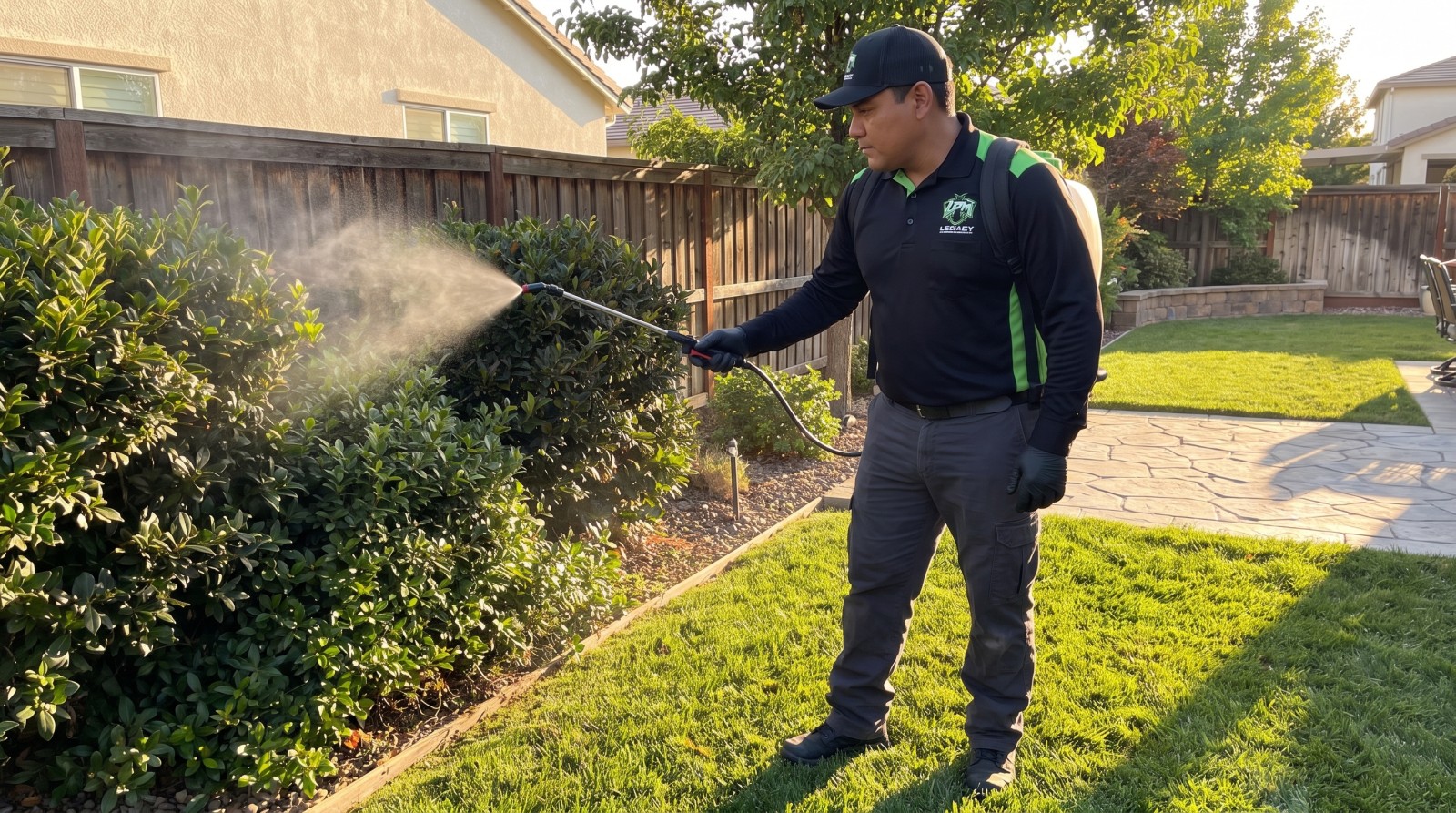
Mosquito work in San Diego County is mostly about water, not about spraying. Almost every mosquito biting you in your own yard developed within a short distance of where you are standing, in something holding water that nobody thought of as a water source.
Call 619-277-4796 and tell us when and where you are being bitten, because that narrows the species considerably.
Three invasive Aedes species have been detected in the county and were first found here in 2014. They are small, black and white striped, they bite during the day, and they go for the legs and ankles. They are aggressive repeat biters.
What makes them a container problem rather than a marsh problem: they lay eggs in small containers of water, indoors and out, in as little as a quarter of an inch. Eggs survive for months in a dry container and hatch when it refills. Egg to adult takes about a week. They are most active in summer and fall.
San Diego recorded its first locally acquired dengue case in 2025, which is a genuine change worth knowing about without being alarmed by it.
Here is a correction worth making, because it is stated backwards constantly. West Nile virus is carried by Culex mosquitoes, not by the invasive Aedes. They are different insects with different habits and different breeding sites. Culex tarsalis is the leading vector in rural settings; the Culex pipiens complex dominates in urban ones.
Culex breed in larger, longer-standing water: neglected pools, ponds, animal troughs, irrigated ground and drainage. County surveillance has recorded West Nile positives across this service area, including El Cajon, Lakeside and La Mesa, with activity typically peaking in August.
If you are being bitten in daylight near Ocean Beach, Point Loma or the river mouth, particularly after a very high tide, this may be why. The black salt marsh mosquito breeds in coastal salt marsh and lagoons, is among the most aggressive daytime biters, and can travel more than ten miles from where it developed. Populations surge after tides above roughly six feet.
The county treats that habitat directly and reports this species does not transmit disease locally. It is a nuisance rather than a health problem, and it is not something treating your own yard will fix at source.
Source reduction, done weekly, outperforms anything else. The list is longer than people expect:
A quarter inch is enough. Weekly is the interval that matters, because it is shorter than the egg-to-adult cycle.
These are free and most people do not know about them:
Mosquitofish. The county provides them at no cost for backyard water sources: green pools, ornamental ponds, fountains and troughs. There are collection points around the county, including one in Lakeside. They are strictly for contained backyard water and must never be released into lakes, streams, rivers or creeks, where they compete with native species.
Neglected pool reporting. A green pool a few doors away can be producing mosquitoes for a whole street. The county uses aerial surveillance to find them and will treat with mosquitofish or bacterial larvicides that are safe around people, pets and wildlife.
Dead bird reporting. Part of West Nile surveillance. They collect crows, ravens, jays, hawks, owls and falcons that have died within the last day.
No, and anyone promising that is overselling. Adults are replaced continuously from breeding sites, many of them off your property. Removing standing water is what actually changes the population.
That pattern strongly suggests invasive Aedes, which breed in small containers on your own property. Weekly emptying of everything that holds water is the fix.
It is present in this area and worth taking seriously without panic. It is spread by Culex mosquitoes from larger standing water, not by the day-biting Aedes. Horses can be affected as well as people, so if you keep animals it is worth a conversation with your vet.
Not meaningfully for mosquitoes. Zappers kill mostly harmless insects, and ultrasonic repellents have no credible evidence behind them.
That is worth reporting to county vector control. They will address it, including with free mosquitofish, and one untreated pool can affect a whole block.
Mosquito Control commonly overlaps with these:
We run mosquito control from both offices. See El Cajon or San Diego for the communities each one covers, or browse the full list of service areas. You can also send us a request, or read more about Legacy Pest Management.
Call 619-277-4796 or send a request and tell us what you are dealing with. We will recommend a plan that fits the property rather than a default package. We are open 24 hours a day, seven days a week.

Get Started
Tell us what you are seeing and where it is happening. You will get an honest assessment of the problem, what it takes to solve it, and whether your property needs ongoing service or a single visit. Pest, wildlife and termite work across San Diego County.