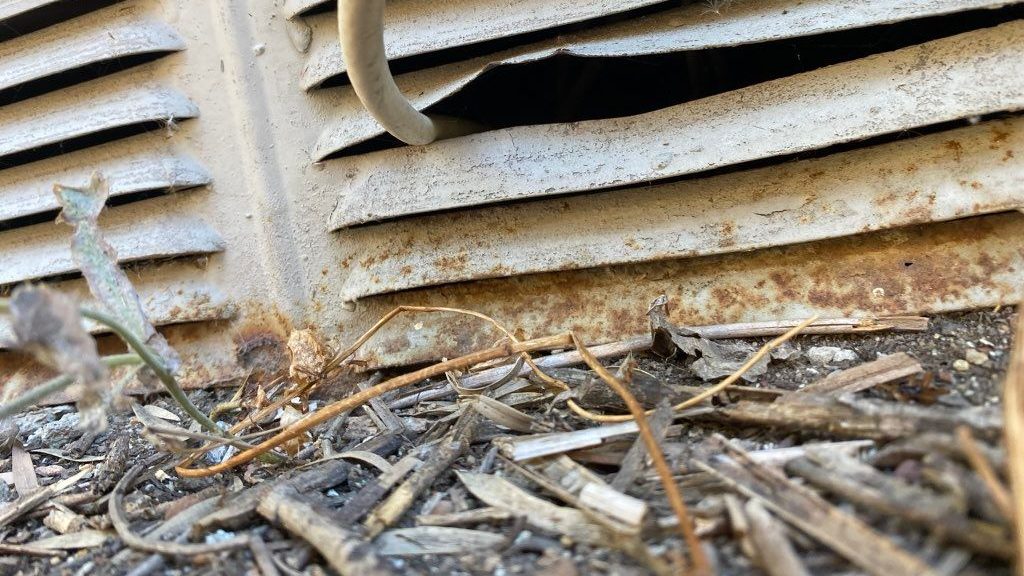
Bird work is the part of wildlife control where the law does most of the deciding. What you are allowed to do depends almost entirely on which bird it is and whether the nest is in use, and getting that wrong is a federal matter rather than a bad review.
So Wildlife Removal starts bird jobs with identification, then works out what is lawful, then quotes. Not the other way around.
Most native birds in the United States are protected under the Migratory Bird Treaty Act, which covers the birds, their eggs and their nests.
Three of the birds that cause most building problems are not covered, because they are not native: the rock pigeon, the European starling and the house sparrow. Those three are the usual tenants of a warehouse rafter, a sign cabinet, a solar array or a parking structure ledge, and they can be dealt with directly.
Nearly everything else on a San Diego County building is protected, and that changes the job from removal to timing and exclusion.
The distinction that governs a protected-species job is whether the nest is in use.
An inactive nest, with no eggs and no young, can generally be removed. A nest in use cannot be disturbed, and the work waits until the birds have finished and left of their own accord.
There is a separate trap worth naming, because a lot of companies fall into it: relocating a nest is not the same as removing one. Relocation means taking possession, and possession of a protected nest requires a federal permit. If someone offers to move your nest somewhere safer, they are describing something they probably cannot lawfully do.
One narrow allowance is worth knowing. Federal regulation permits removing a migratory bird from inside an occupied building where it has become trapped, and that authorisation does not extend to nests on the outside of the structure.
Cliff swallows are the classic San Diego County version of this problem: mud nests built under eaves, on stucco, along the underside of a balcony, in numbers.
UC treats the nesting season as roughly 15 February to 1 September. Inside that window an occupied nest is untouchable. Outside it, old nests can be removed and, more importantly, the surface can be modified so the next season's birds cannot attach to it.
Which is the whole strategy with swallows. Removing nests in September and doing nothing else buys one year. Changing the surface buys the building.
Bird exclusion is physical work and the right method depends on the surface and the bird.
Netting closes a volume: a courtyard, a loading dock, the underside of a solar array, an open rafter bay. Done properly it is tensioned and nearly invisible from the ground. Done badly it sags, traps birds, and becomes its own problem.
Ledge modification makes a perch unusable by changing its angle, rather than adding hardware to it.
Spikes and wire systems work on rails, signage and narrow ledges, and are frequently installed in the wrong places by people selling by the foot.
Solar array screening is its own category in this county, because pigeons nesting under panels are common, the mess is substantial and the panels themselves are easy to damage during a careless installation.
What we will not do is treat birds with a product. There is no lawful pesticide answer here, and anyone offering a spray for a bird problem is describing an unlawful application.
Accumulated droppings are corrosive to some building materials, slippery on walkways, and the part of the job that carries the actual health handling requirement. Cleanup is done with proper respiratory protection and containment rather than a hose.
It is also the part that gets left out of cheap quotes, so it is worth asking anyone you are comparing us against whether their number includes it.
If it is a pigeon, starling or house sparrow, generally yes. If it is a protected species and the nest is in use, no, and neither can anyone else. We will tell you which one you have.
Common, and worth doing properly. The panels are screened at the perimeter so the cavity is closed without impeding airflow or the panel mounts.
On the right surface, for the right bird. On the wrong one they redirect the problem three feet sideways, which is why the survey comes before the hardware.
Netting and screening are long-lived if they are tensioned and fixed correctly. Most failures we are called to fix are installation failures rather than material ones.
Bird work sits under Wildlife Removal, with Raccoon Control, Opossum Control and Skunk Control. Nest material frequently brings mites and beetles indoors, which is General Pest Control.
We handle bird work from both offices. See El Cajon or San Diego for the communities each covers, or browse the full list of service areas. You can also send us a request, or read more about Legacy Pest Management.
Tell us what the birds look like, where they are nesting and whether there are eggs or young. A photograph settles most of it faster than a description.
Get Started
Tell us what you are seeing and where it is happening. You will get an honest assessment of the problem, what it takes to solve it, and whether your property needs ongoing service or a single visit. Pest, wildlife and termite work across San Diego County.