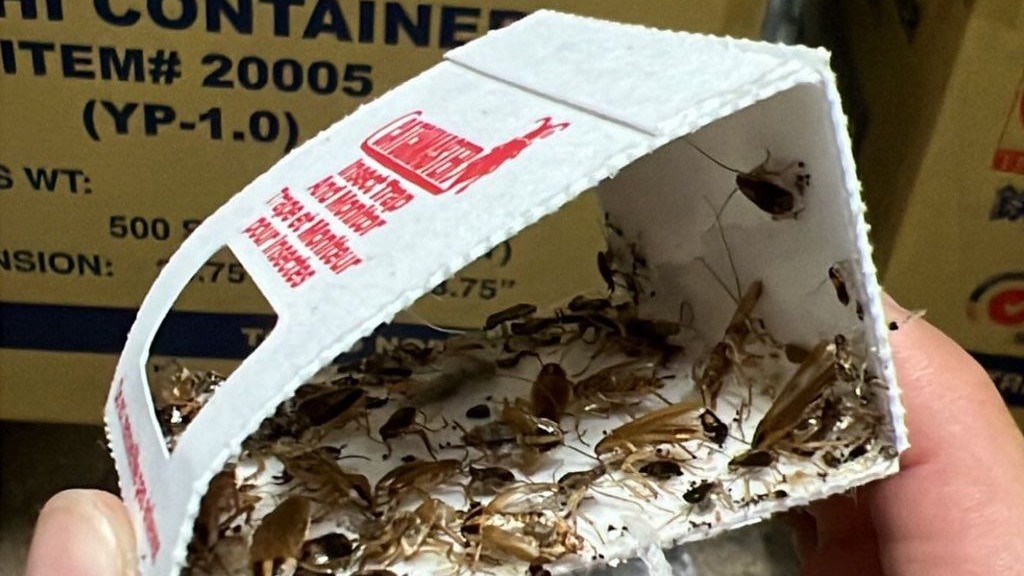
Cockroach control is one of the few pest jobs where identifying the species is not a technicality. Several of the roaches people find in San Diego County homes cannot breed indoors at all, and treating the kitchen for one of those is money spent in the wrong room.
Call 619-277-4796 and tell us what you are finding, and whether you are finding them alive or dead.
The German cockroach is the species that breeds indoors and the one that genuinely takes hold. It prefers warm, humid areas close to food and water, and it lives in kitchens, bathrooms and food preparation areas.
The number that explains the urgency: a single female and her offspring can produce over 30,000 individuals in a year. That is why a handful becomes a serious problem quickly, and why waiting to see if it settles down is the wrong instinct.
American cockroaches are the large ones. They live in sewers, storm drains, water meter boxes and steam tunnels, preferring conditions above about 82°F, and forage up into ground floors through damaged pipework and floor drains whose traps have dried out. They do not breed in your kitchen. The treatment target is the exterior drain and the meter box.
Turkestan cockroaches are now very common in California's residential outdoor areas and are displacing the Oriental cockroach across warmer parts of the state. They live in water meter boxes, irrigation boxes, wood and debris piles, pavement cracks and leaf litter. This one matters because it is widely misdescribed: UC states plainly that they will not establish indoor populations. Individuals wander in looking for water and die there. If you keep finding dead roaches inside but never a live population, that is usually what is happening.
Oriental cockroaches favor cool, dark, damp places, garages, basements, meter boxes and drains, and are common around properties with heavy vegetation. They cannot climb smooth surfaces, which is why they end up stuck in sinks and baths.
Field cockroaches invade indoors when it is hot or dry outside, and are routinely mistaken for German cockroaches. That misidentification sends the entire treatment in the wrong direction, and it is one of the most common errors we correct.
Brownbanded cockroaches account for only about one percent of indoor infestations statewide and behave differently again, turning up in and near electrical appliances, behind pictures and in hollow furniture legs rather than in kitchens.
In apartments, condos, converted duplexes and any connected building, German cockroaches spread along a very specific pattern. Research in a high-rise found infestation clustered in units across a hallway from one another, units sharing a wall on the same floor, and units stacked directly above and below. The routes are the shared kitchen and bathroom plumbing between neighbors and the vertical plumbing chases between floors.
In the same study a building-wide program took infestation from about half the units to roughly one in eight within twelve months, while the sideways spread pattern disappeared after treatment and the vertical one persisted longest.
The practical conclusion is uncomfortable but consistent: treating the unit that reported the problem does not hold if the source is two doors away. If you are a tenant, this is also why the problem is usually not about your housekeeping, and we will say so in writing if that helps the conversation with a landlord.
Sticky traps placed before any treatment do two things: they establish which species you actually have, and they show where the population is concentrated. Traps beside stoves and refrigerators catch significantly more than traps under sinks or in bathrooms, which is worth knowing if you have been monitoring in the wrong places.
Baits are the core of German cockroach work, because they are carried back and shared. Sprays kill what they contact and can drive the population deeper into voids.
And the part nobody wants to hear: pesticides alone will not solve a cockroach problem. Sanitation and moisture removal are prerequisites, not optional extras. Water is usually the harder of the two to fix and the more important.
In a connected building that is common and it is not a reflection on you. They travel the shared plumbing. The treatment that works covers the affected units together.
Usually an outdoor species wandering in from a meter or irrigation box looking for water and dying indoors. They do not breed inside. Treating the kitchen will not change it; treating outside will.
That pattern points to a drain. A floor drain or unused fixture whose trap has dried out is a direct route in from the sewer system. Running water through it and treating outside usually settles it.
Generally not. They scatter the population into voids and do not reach harborage, which makes the follow-up job harder rather than easier.
For a genuine German cockroach infestation, expect a program rather than a single visit, with monitoring to confirm it is actually going down.
Cockroach Control is part of our General Pest Control program, and commonly overlaps with these:
We run cockroach control from both offices. See El Cajon or San Diego for the communities each one covers, or browse the full list of service areas. You can also send us a request, or read more about Legacy Pest Management.
Call 619-277-4796 or send a request and tell us what you are dealing with. We will recommend a plan that fits the property rather than a default package. We are open 24 hours a day, seven days a week.
Get Started
Tell us what you are seeing and where it is happening. You will get an honest assessment of the problem, what it takes to solve it, and whether your property needs ongoing service or a single visit. Pest, wildlife and termite work across San Diego County.